An
archaeological investigation in the summer of 2025 has transformed our
understanding of Clavering’s castle. Led by Simon Coxall, the dig involved just
two trenches. The information that those holes in the ground revealed was
enough to rewrite our understanding of the rise – and fall – of what must have
been one of the most prestigious buildings in the local area.
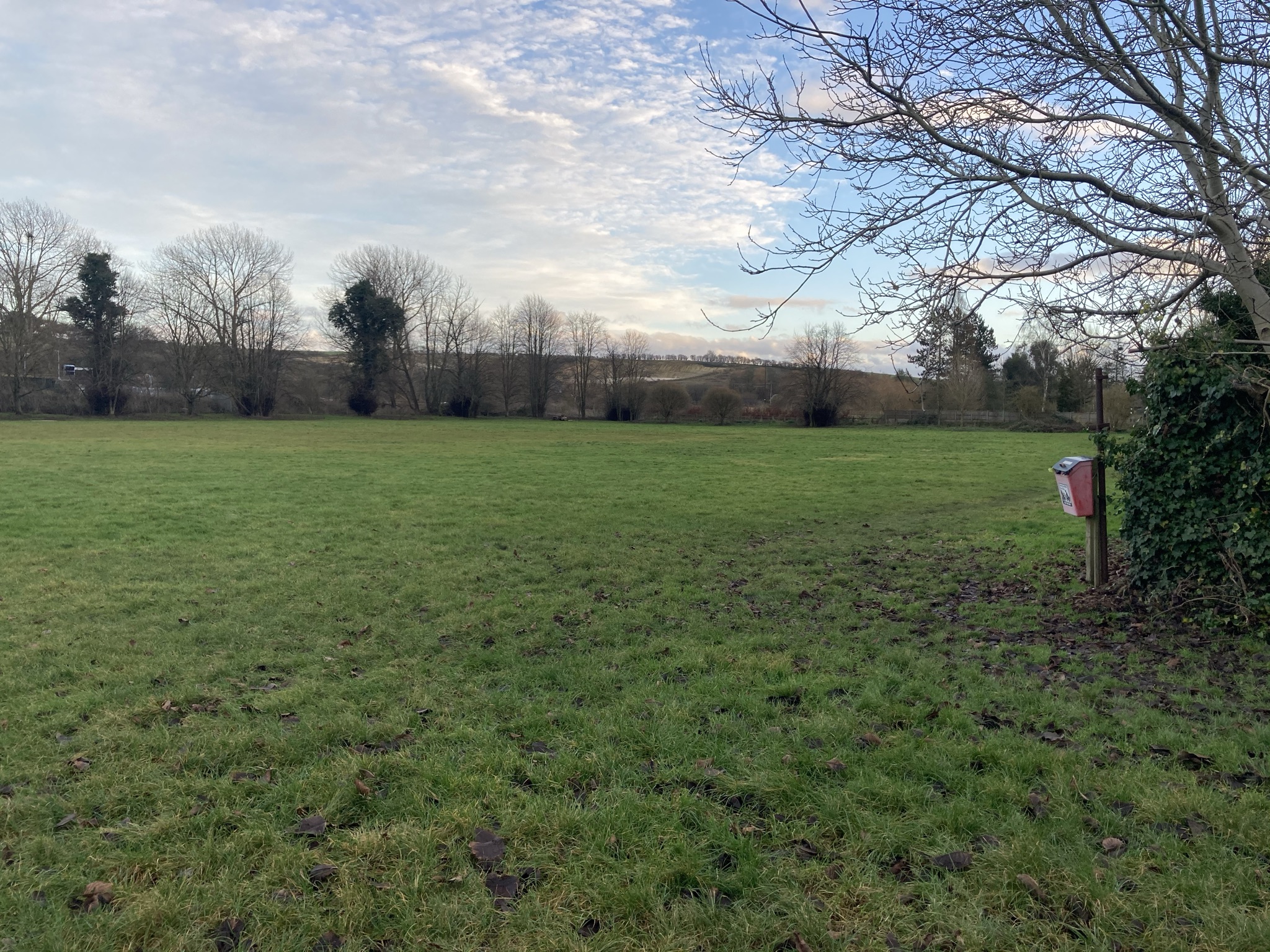
Clavering’s
castle stood on a moated site to the west of the parish church. Talking to
Newport’s local history group in March, Simon explained how the present church
was built adjacent to an earlier chapel dedicated to St John the Evangelist.
The chapel marked the miraculous event said to have occurred when Edward the
Confessor gave a valuable ring to a beggar, who turned out to be none other
than St John the Evangelist. We know that the site was visited by Henry III in
1251.
Clavering
was clearly an important medieval manor. Simon summarised the descent of the aristocratic
families that had occupied the site. The castle was built by Robert Fitzwymarc,
one of the few aristocrats from before the Conquest to survive and prosper
after 1066. ‘Robert’s castle’ was constructed on a platform created by 30,000
square metres of soil thrown up from the excavation of the moat and from the adjoining
fields in Clavering. The labour involved must have been immense – an indication
of Fitzwymarc’s power.
The
moat involved the re-engineering of part of the river Stort, which continues to
flow through the village. Through close analysis of hydrological data, Simon showed
that the current position of the ford in Middle Street had shifted from where
it would have been prior to the castle being built.
Fitzwymarc’s
property passed to the de Clavering family (after Henry of Essex was defeated
in a trial by combat). From the de Claverings it passed in the 14th
century to the powerful Neville family, owners of huge estates in the north of
England.
The
castle’s final owner was Margaret Pole, Countess of Salisbury, daughter of the Duke
of Clarence (the unlucky brother of Edward IV and Richard III, who met his fate
in 1478). Margaret was in turn executed by Henry VIII in 1541 as part of his attempt
to annihilate all traces of the Plantagenet family line. Margaret’s execution was
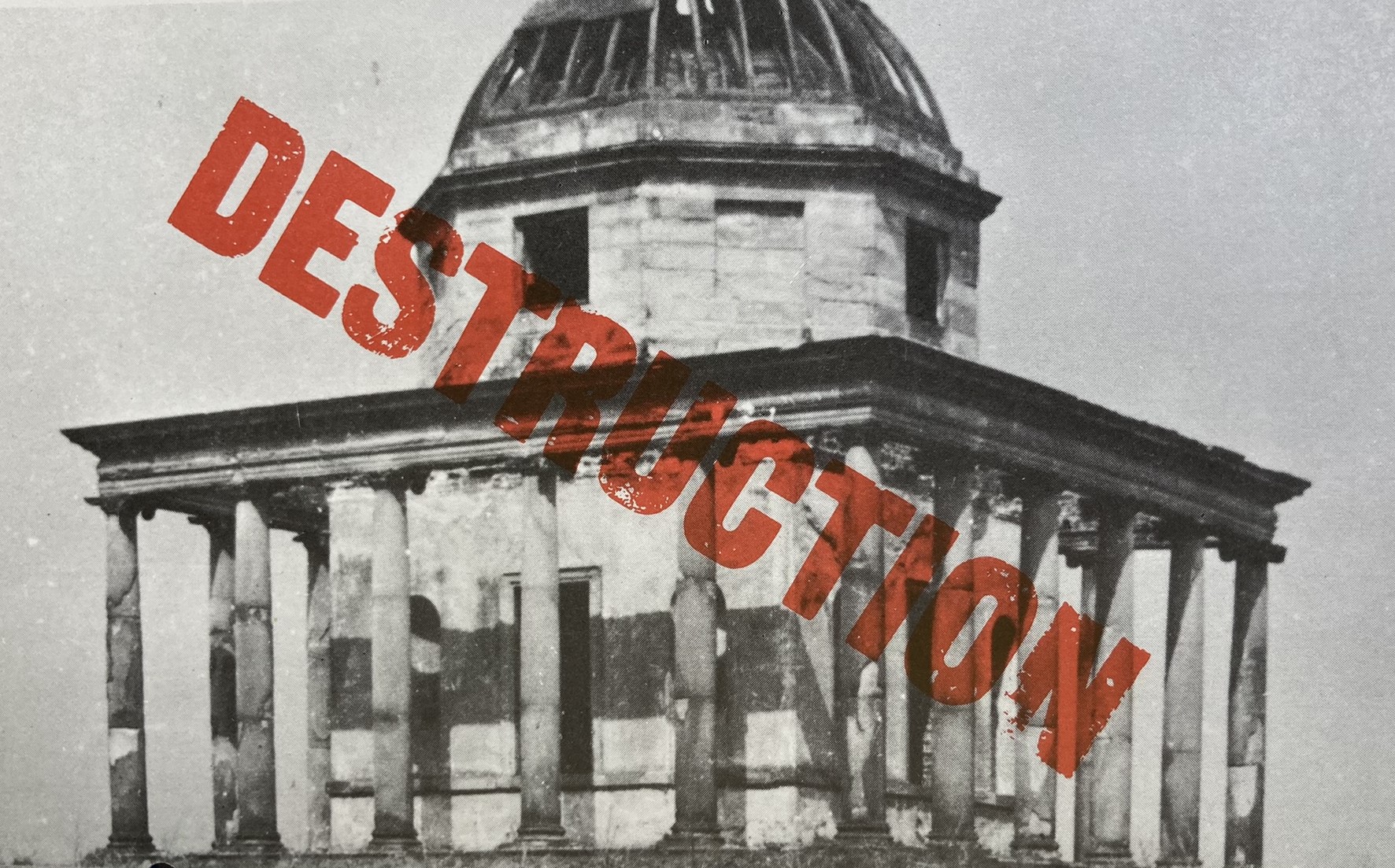
followed by the systematic razing of the castle at Clavering.
Any
archaeological dig involves significant amounts of work both before, and after,
the point at which any spade hits the ground. Driven by the Clavering Landscape
History Group the investigation began
with geophysical readings taken in 2020/21, revealing the lines of earlier
buildings on the site. This evidence was assessed to inform the placing of two
trenches, one across the entranceway to what appeared to be one of the
courtyards constructed on the castle platform, and the other in a spot less likely
to have been disturbed by later periods of construction at the site.
Scheduled
monument consent was required before any digging could commence. Investigation
could not be carried out on the site of what would have been the castle’s main
hall, since this part of the castle platform has now been colonized by a sett
of badgers. Much of the dig involved disentangling evidence of the castle from
the detritus left by the phase of its eventual demolition.
The
dig, in the blazing heat of June 2025, produced almost no finds dating to later
than 1550, demonstrating the complete erasure of the castle from the landscape
at the time of its destruction. Equally, there was not a great deal of material
from before c.1000 AD. Such early pottery as was found such as one fragment of
a Romano-British mortarium had been brought to the site within the material
used to construct the mound. A part of a human mandible (jaw bone) found in the
gatehouse trench was likely to have ended up there as a consequence of an
animal digging it up from the nearby churchyard.
The
trenches produced more than two and a half thousand pieces of animal bone, and
a great many medieval nails and roof tiles used in the construction of the
(wooden) castle buildings (the castle probably resembled the still-standing Stokesay
Castle in Shropshire). Oyster shells were found in
significant quantities, being the medieval equivalents of builders’ packets of
crisps. Trench one revealed the surface of the roadway leading into the castle,
as well as part of the wall of the gatehouse.
The
post-dig analysis has involved careful assessment of the stratification of the
finds. This has enabled the reconstruction of the likely history of the castle.
Augmented over time by a gatehouse and a double courtyard, the complex was then
ordered to be destroyed. The demolition was swift and brutal, and involved the
covering-over of whatever remnants of the building couldn’t otherwise be
removed and reused. A metre’s depth of archaeology reflects 500 years of
occupation. Since c.1550, when this act of destruction took place, a thin layer
(c16cm) of top soil has accumulated over the platform, which otherwise reveals
no immediately visible clues to its past.
Just
two holes in the ground, therefore, and a great deal of effort on the part of Simon
and his team of volunteer archaeologists, has thrown new light on Clavering
Castle, a building that stood for just 500 years.
We
were thrilled that Simon came to Newport to tell us the story. Perhaps one day
archaeological investigation might solve the mystery of whether Newport ever
had a similar castle – said by some to be located on the site of what is now
the Joyce Frankland Academy.
Ben
Cowell


%20takes%20a%20tour.JPEG)